bangkoktoday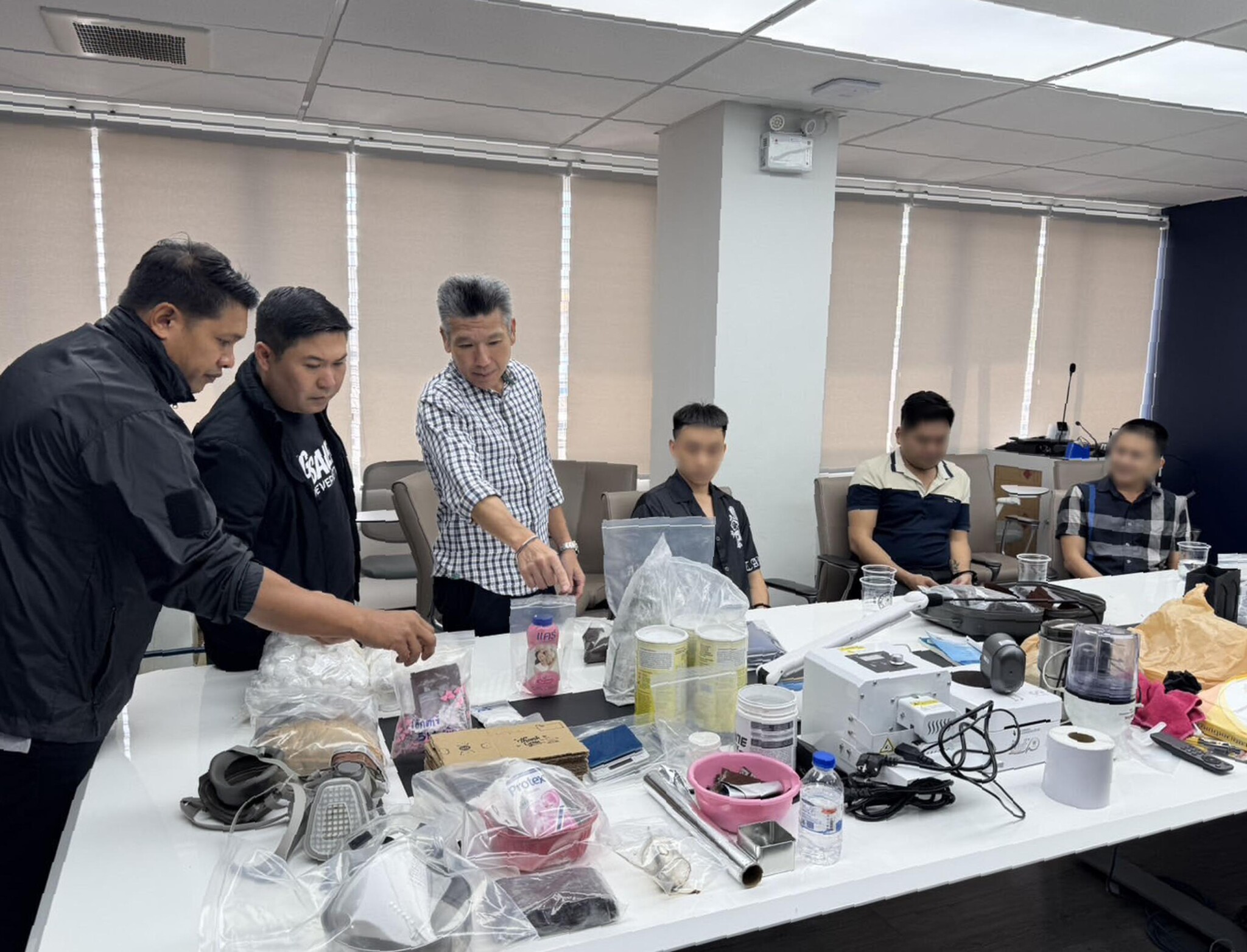
Vietnamese arrested for manufacturing ecstasy in Bangkok using ketamine shipped in parcels from the Netherlands for distribution in Asia.
An international drug trafficking network that supplied drugs from Europe has been stopped in Thailand. Thai authorities have arrested four Vietnamese citizens who organized the production of narcotics in Bangkok.
An operation aimed at combating drug trafficking has uncovered a supply route for ketamine from the Netherlands using international postal services. The ketamine was then processed into ecstasy tablets for distribution throughout Southeast Asia, Lt. Gen. Panurat Lukboon, secretary general of the ONCB, said in announcing the arrests on August 21.
The operation began on August 15, when ONCB, together with other agencies, including Customs, intercepted 5.2 kilograms of ketamine hidden in international parcels and disguised as snack packages from the Netherlands. On August 18, officers conducted surveillance at a condominium listed as the delivery address for the packages.
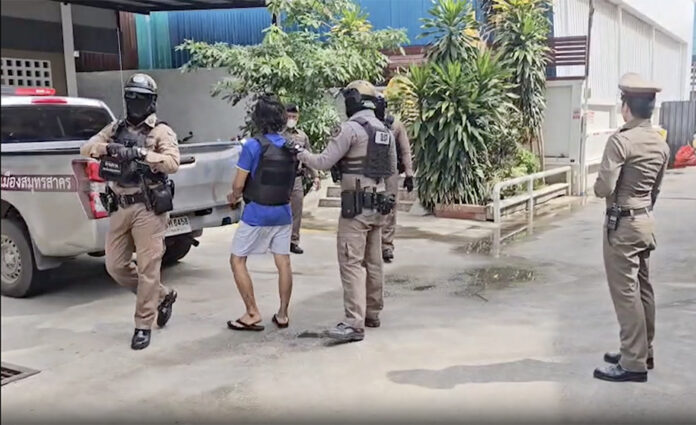
That evening, they spotted two Vietnamese nationals arriving to pick up packages containing ketamine. Authorities detained the suspects and subsequently raided a rented home in the Lat Phrao area, where two more Vietnamese nationals were detained.
During the search, 514 ecstasy tablets, ecstasy powder, an automatic tablet pressing machine with various logos, and numerous pieces of tablet-making equipment were found. All of this was seized as evidence. The suspects testified that they planned to mix ketamine with MDMA to create ecstasy powder, which was then pressed into tablets.
Investigators have found that modern ecstasy production increasingly uses ketamine to enhance the drug’s effects. The network then distributed the tablets through entertainment venues, with some believed to be smuggled back into Vietnam for sale.
These findings are supported by information collected during the 17th Thai-Vietnamese Bilateral Drug Prevention and Suppression Cooperation Meeting held in Hanoi in mid-August 2025, where authorities exchanged data on ecstasy trafficking. Lt. Gen. Panurat noted that Vietnamese drug traffickers specializing in ecstasy production have faced intense crackdowns and arrests in Vietnam. Last year alone, Vietnamese authorities seized more than 3 million methamphetamine and ecstasy tablets.
This pressure from law enforcement has forced Vietnamese drug traffickers to move operations to Thailand for both production and distribution. Narcotics Bureau Director Prin Mecanant explained that ecstasy comes from European sources and ketamine from the Golden Triangle region, known for producing opiates, methamphetamine, and other drugs.
Vietnamese chains use automated tablet-pressing machines capable of producing more than 100,000 tablets a day, targeting tourists and entertainment customers of all demographics, not just Vietnamese nationals. Authorities have found that foreign drug trafficking networks operating in Thailand are using the country as a transit point, ordering drugs from abroad and sending them via international parcels.
The drugs are hidden in various commercial products before being shipped to Thailand. Recipients of the packages use foreign names and list condominiums as delivery addresses, without providing apartment numbers, even though they do not actually live there.
Members of the network receive packages by presenting passport photos on their mobile phones to condominium management. ONCB maintains close cooperation with international agencies, including Singapore, Vietnam, China, South Korea, Indonesia, and Malaysia, to combat drug networks using Thailand as a base or transit point. Information sharing and joint investigations have led to concrete results in tracking and dismantling transnational criminal organizations.
The arrests highlight the evolving nature of the international drug trade and the importance of regional cooperation in combating sophisticated smuggling operations that exploit legitimate postal and courier services. In the context of Russian-Thai relations, this cooperation is of mutual interest, as both countries are interested in curbing drug trafficking and ensuring the safety of their citizens.
Read More Articles Here
Read More Articles Here